
大家好,欢迎来到IT知识分享网。
文章目录
1 概述
1.1 expdp、impdp 和 exp、imp 区别
| expdp | impdp | exp | imp | |
|---|---|---|---|---|
| 导出 | √ | × | √ | × |
| 导入 | × | √ | × | √ |
| 使用场景 | 仅服务端使用 | 服务端 和 客户端 均能使用 | ||
| 适用版本 | Oralce 11g 之后 | Oracle 10g 机之前 | ||
| 效率 | 较高 | 略低 | ||
| 其它 | expdp 只能和 impdp 搭配使用 | exp 只能和 imp 搭配使用 | ||
expdp(export dump):导出。 读取数据库并将结果集写入到 “导出转储文件(Export Dump File)” 的二进制文件中
impdp(import dump):导入。读取上述二进制文件并写入到数据库
1.2 使用建议
- 建议将命令写在一行。避免因换行导致部分命令未执行
- 建议在 Windows 运行窗口执行。
2 expdp、impdp
-- 通过以下命令,可查询 expdp 支持的参数,impdp 同理 expdp help=y 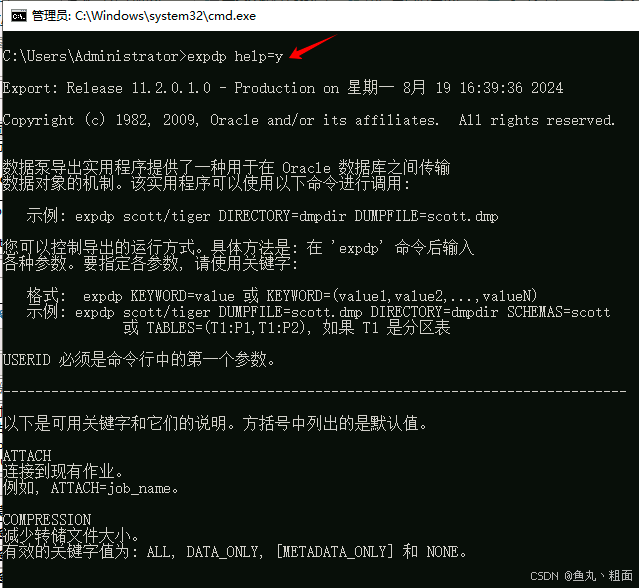
2.1 前提:创建 directory 对象
-- 1.先看 directory 对象是否存在 select * from dba_directories t where t.directory_name = 'MYDIR'; -- 2.若不存在,则创建 create directory mydir as 'D:\mydir'; 授权(若非 system 用户,则需要,如 scott):
-- 授予 create 权限 grant create any directory to scott; -- 授予 read,write 权限 grant read, write on directory mydir to scott; -- 查看拥有 directory 相关权限的用户 select * from dba_sys_privs t where t.privilege like '%DIRECTORY%'; -- 查询拥有 read,write 相关权限的用户 select * from dba_tab_privs t where t.privilege in ('READ', 'WRITE'); 示例:
Connected to Oracle Database 11g Enterprise Edition Release 11.2.0.1.0 Connected as system@orcl SQL> create directory mydir as 'D:\mydir'; Directory created SQL> grant read, write on directory mydir to scott; Grant succeeded SQL> select * from dba_directories t where t.directory_name = 'MYDIR'; OWNER DIRECTORY_NAME DIRECTORY_PATH ------------------------------ ------------------------------------------- SYS MYDIR D:\mydir SQL> 2.2 导出 expdp
| 模式(dumpfile) | 描述 |
|---|---|
| full | 全库 |
| schema | 模式 |
| table | 表 |
| tablespace | 表对象 |
-- 实际开发中,只保留一个空格、不换行,此处仅为了 "显示差异" expdp 用户名/密码@数据库 目录 转储文件(二进制) 导出模式 是否开启日志 expdp scott/scott@orcl directory=mydir dumpfile=tables.dmp tables=emp,dept logfile=tables.log expdp scott/scott@orcl directory=mydir dumpfile=schemas.dmp schemas=scott logfile=schemas.log expdp scott/scott@orcl directory=mydir dumpfile=tablespaces.dmp tablespaces=users logfile=tablespaces.log expdp system/system@orcl directory=mydir dumpfile=full.dmp full=Y nologfile=Y 例1:导出 scott 下的表 emp
-- 其中 mydir、emp.dmp、emp.log 为自定义名称 expdp scott/scott@orcl directory=mydir dumpfile=emp.dmp tables=emp logfile=emp.log -- 导出多张表 expdp scott/scott@orcl directory=mydir dumpfile=emp.dmp tables=emp,dept logfile=emp.log 例2:导出 scott 下的表 emp 中符合条件的记录
expdp scott/scott@orcl directory=mydir dumpfile=emp.dmp tables=emp query='emp:"WHERE deptno=10 AND sal>2000"' logfile=emp.log 命令行截图:

物理文件截图:

2.3 导入 impdp
例1:导入 scott 下的表 emp
-- 一般格式 impdp scott/scott@orcl directory=mydir dumpfile=emp.dmp tables=emp logfile=emp.log -- 导入,追加 impdp scott/scott@orcl directory=mydir dumpfile=emp.dmp tables=emp table_exists_action=APPEND 3 exp、imp
-- 通过以下命令,查询看 exp 支持的参数,imp 同理 exp help=y 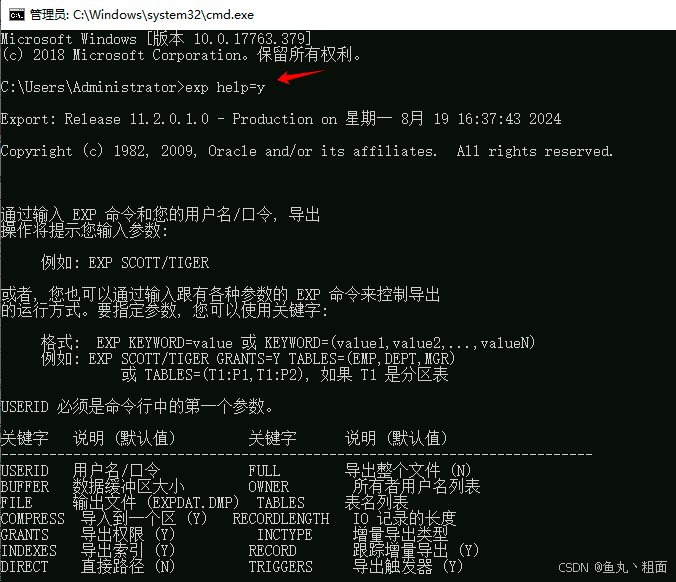
3.1 导出 exp
| 模式 | 描述 |
|---|---|
| full | 全库 |
| owner | 用户 |
| tables | 表 |
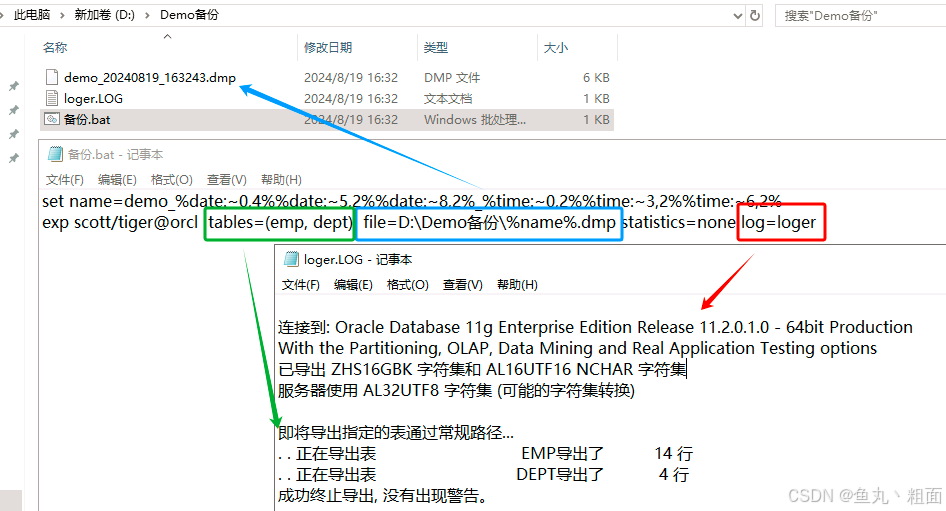
-- 1.全库导出 exp 用户名/密码 file=文件路径 full=Y -- 2.按用户导出 exp 用户名/密码 file=文件路径 owner=用户 -- 3.按表导出 exp 用户名/密码 file=文件路径 tables=(表1, 表2, 表n) 示例1:导出 scott 下的表 emp 和 dept
set name=demo_%date:~0,4%%date:~5,2%%date:~8,2%_%time:~0,2%%time:~3,2%%time:~6,2% exp scott/tiger@orcl tables=(emp, dept) file=D:\Demo备份\%name%.dmp statistics=none 注:以上可保存为
.bat文件,双击运行
3.2 导入 imp
- 导入 imp 与 导出 emp 命令基本一致
-- 导入表 emp 和 dept imp soctt/tiger@orcl tables=(emp, dept) file=D:\Demo备份\备份.dmp 4 扩展
4.1 Windows 运行窗口
- 快捷键
Win + r打开运行窗口,并输入cmd
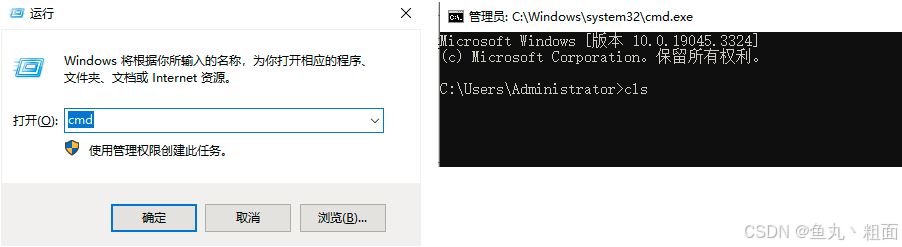
cls:清屏命令
4.2 expdp 不是内部或外部命令
- 报错截图:
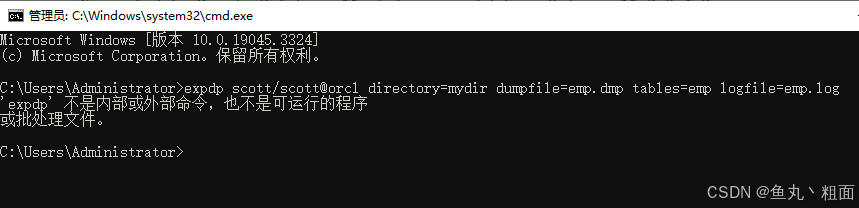

- 解决办法:配置环境变量
- ① 找到 Oracle 客户端 bin 目录 的路径,如:
C:\orac1e\product\12.1.0\dbhome_1\bin - ② 在 “系统变量” 中选中 “Path” 变量,添加
- ① 找到 Oracle 客户端 bin 目录 的路径,如:
免责声明:本站所有文章内容,图片,视频等均是来源于用户投稿和互联网及文摘转载整编而成,不代表本站观点,不承担相关法律责任。其著作权各归其原作者或其出版社所有。如发现本站有涉嫌抄袭侵权/违法违规的内容,侵犯到您的权益,请在线联系站长,一经查实,本站将立刻删除。 本文来自网络,若有侵权,请联系删除,如若转载,请注明出处:https://haidsoft.com/114784.html