
大家好,欢迎来到IT知识分享网。
提示:文章写完后,目录可以自动生成,如何生成可参考右边的帮助文档
文章目录
一. python相关知识
1. 解释型语言与编译型语言
- 把高级语言翻译成机器语言,计算机才能运行高级语言所编写的程序。翻译的方式有两种,一个是编译,一个是解释
- 编译型语言写的程序执行之前,需要一个专门的编译过程
- 解释型语言没有严格编译汇编过程,由解释器将代码块按需要变运行边翻译给机器执行
- .pyc是可以由虚拟机直接执行的,是python将目标源码编译成字节码以后在磁盘上的文件形式。
二. pyc文件逆向
1. pyc 文件简介
- pyc是一种二进制文件,是由Python文件经过编译后所生成的文件,它是一种字节码文件,Python文件变成pyc文件后,加载的速度有所提高,最终经过python解释器转换成机器码运行
- Python是解释型语言,没有严格意义上的编译和汇编过程。但是一般编写好的.py源文件,由python解释器翻译成以.pyc为结尾的字节码文件,该文件可由python虚拟机直接运行
- 根据python源码中提供的opcode,可以根据pyc文件反编译出py文件源码
2. pyc文件结构
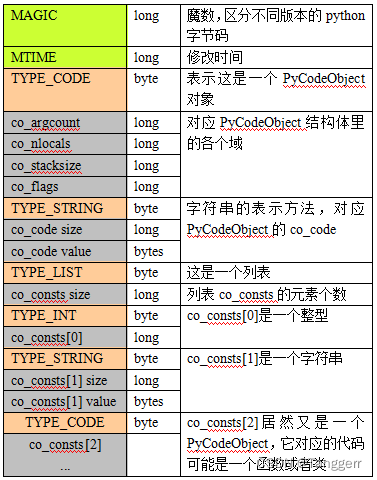
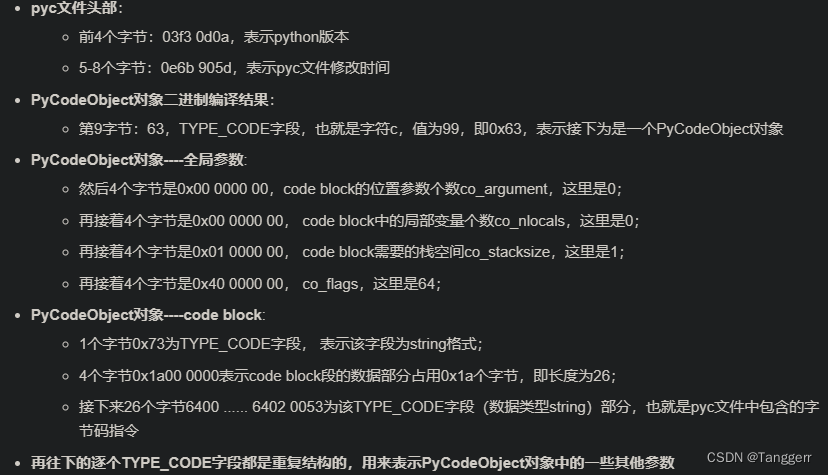
- Python代码的编译结果就是PyCodeObject对象,pyc文件就是PyCodeObject对象在硬盘上的保存形式
- pyc文件结构主要包括两部分:pyc文件头部表示和PyCodeObject对象部分。
- 下面就是完整的Pyc文件结构

3. pyc 文件的生成
- 方法一:命令行
python3.6 -m py_compile test.py - 方法二:脚本:
>>> import py_compile >>> py_compile.compile('test.py') 4. pyc文件反编译
- 在命令行中,uncompyle6加上需要反编译的文件参数即可,注意使用-o 选项输出到文件中
uncompyle6 -o test.py test.pyc - 这会将test.pyc文件反编译,并输出到test.py文件中

- 可以将这个长路径加入环境变量,下次用直接输uncompyle6即可
5. python字节码解读
- 博客园搜python逆向
https://www.cnblogs.com
三. attachment.pyc
- 按照之前的步骤进行反编译,得到.py文件
- 看一下他的代码
print 'Welcome to Re World!' print 'Your input1 is your flag~' l = len(input1) for i in range(l): num = ((input1[i] + i) % 128 + 128) % 128 code += num for i in range(l - 1): code[i] = code[i] ^ code[i + 1] print code code = ['\x1f', '\x12', '\x1d', '(', '0', '4', '\x01', '\x06', '\x14', '4', ',', '\x1b', 'U', '?', 'o', '6', '*', ':', '\x01', 'D', ';', '%', '\x13'] - 那么我们只需编写python脚本就能解密
code = ['\x1f', '\x12', '\x1d', '(', '0', '4', '\x01', '\x06', '\x14', '4', ',', '\x1b', 'U', '?', 'o','6', '*', ':', '\x01', 'D', ';', '%', '\x13'] flag = "" for i in range(len(code) - 2, -1, -1): code[i] = chr(ord(code[i]) ^ ord(code[i + 1])) for j in range(len(code)): flag += chr(((ord(code[j]) - j)+128) % 128) print(flag) - 解得flag{Just_Re_1s_Ha66y!}
四. VNCTF2022 BabyMaze WP
- 拿到题,第一反应是用uncompyle6来直接逆,不成功
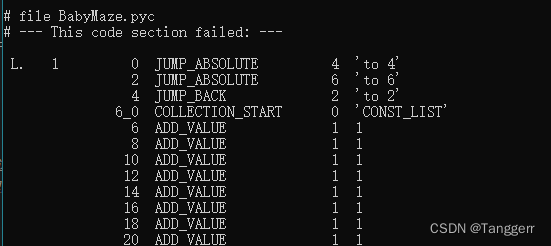
- 发现有花指令
- 用010编辑器打开.pyc文件
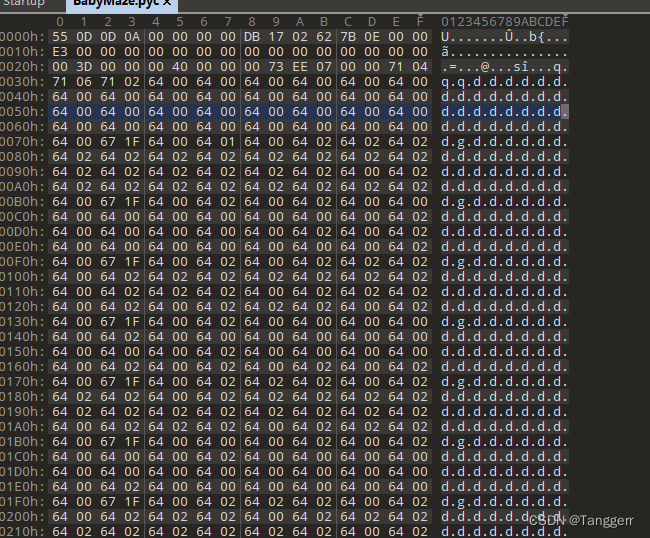
- 得出JUMP_ABSOLUTE的机器码为113即0x71,直接删除他
- 下面就是字节码对应机器码的数字,即opcode.h
#ifndef Py_OPCODE_H #define Py_OPCODE_H #ifdef __cplusplus extern "C" {
     #endif /* Instruction opcodes for compiled code */ #define STOP_CODE 0 #define POP_TOP 1 #define ROT_TWO 2 #define ROT_THREE 3 #define DUP_TOP 4 #define ROT_FOUR 5 #define NOP 9 #define UNARY_POSITIVE 10 #define UNARY_NEGATIVE 11 #define UNARY_NOT 12 #define UNARY_CONVERT 13 #define UNARY_INVERT 15 #define BINARY_POWER 19 #define BINARY_MULTIPLY 20 #define BINARY_DIVIDE 21 #define BINARY_MODULO 22 #define BINARY_ADD 23 #define BINARY_SUBTRACT 24 #define BINARY_SUBSCR 25 #define BINARY_FLOOR_DIVIDE 26 #define BINARY_TRUE_DIVIDE 27 #define INPLACE_FLOOR_DIVIDE 28 #define INPLACE_TRUE_DIVIDE 29 #define SLICE 30 /* Also uses 31-33 */ #define STORE_SLICE 40 /* Also uses 41-43 */ #define DELETE_SLICE 50 /* Also uses 51-53 */ #define STORE_MAP 54 #define INPLACE_ADD 55 #define INPLACE_SUBTRACT 56 #define INPLACE_MULTIPLY 57 #define INPLACE_DIVIDE 58 #define INPLACE_MODULO 59 #define STORE_SUBSCR 60 #define DELETE_SUBSCR 61 #define BINARY_LSHIFT 62 #define BINARY_RSHIFT 63 #define BINARY_AND 64 #define BINARY_XOR 65 #define BINARY_OR 66 #define INPLACE_POWER 67 #define GET_ITER 68 #define PRINT_EXPR 70 #define PRINT_ITEM 71 #define PRINT_NEWLINE 72 #define PRINT_ITEM_TO 73 #define PRINT_NEWLINE_TO 74 #define INPLACE_LSHIFT 75 #define INPLACE_RSHIFT 76 #define INPLACE_AND 77 #define INPLACE_XOR 78 #define INPLACE_OR 79 #define BREAK_LOOP 80 #define WITH_CLEANUP 81 #define LOAD_LOCALS 82 #define RETURN_VALUE 83 #define IMPORT_STAR 84 #define EXEC_STMT 85 #define YIELD_VALUE 86 #define POP_BLOCK 87 #define END_FINALLY 88 #define BUILD_CLASS 89 #define HAVE_ARGUMENT 90 /* Opcodes from here have an argument: */ #define STORE_NAME 90 /* Index in name list */ #define DELETE_NAME 91 /* "" */ #define UNPACK_SEQUENCE 92 /* Number of sequence items */ #define FOR_ITER 93 #define LIST_APPEND 94 #define STORE_ATTR 95 /* Index in name list */ #define DELETE_ATTR 96 /* "" */ #define STORE_GLOBAL 97 /* "" */ #define DELETE_GLOBAL 98 /* "" */ #define DUP_TOPX 99 /* number of items to duplicate */ #define LOAD_CONST 100 /* Index in const list */ #define LOAD_NAME 101 /* Index in name list */ #define BUILD_TUPLE 102 /* Number of tuple items */ #define BUILD_LIST 103 /* Number of list items */ #define BUILD_SET 104 /* Number of set items */ #define BUILD_MAP 105 /* Always zero for now */ #define LOAD_ATTR 106 /* Index in name list */ #define COMPARE_OP 107 /* Comparison operator */ #define IMPORT_NAME 108 /* Index in name list */ #define IMPORT_FROM 109 /* Index in name list */ #define JUMP_FORWARD 110 /* Number of bytes to skip */ #define JUMP_IF_FALSE_OR_POP 111 /* Target byte offset from beginning of code */ #define JUMP_IF_TRUE_OR_POP 112 /* "" */ #define JUMP_ABSOLUTE 113 /* "" */ #define POP_JUMP_IF_FALSE 114 /* "" */ #define POP_JUMP_IF_TRUE 115 /* "" */ #define LOAD_GLOBAL 116 /* Index in name list */ #define CONTINUE_LOOP 119 /* Start of loop (absolute) */ #define SETUP_LOOP 120 /* Target address (relative) */ #define SETUP_EXCEPT 121 /* "" */ #define SETUP_FINALLY 122 /* "" */ #define LOAD_FAST 124 /* Local variable number */ #define STORE_FAST 125 /* Local variable number */ #define DELETE_FAST 126 /* Local variable number */ #define RAISE_VARARGS 130 /* Number of raise arguments (1, 2 or 3) */ /* CALL_FUNCTION_XXX opcodes defined below depend on this definition */ #define CALL_FUNCTION 131 /* #args + (#kwargs<<8) */ #define MAKE_FUNCTION 132 /* #defaults */ #define BUILD_SLICE 133 /* Number of items */ #define MAKE_CLOSURE 134 /* #free vars */ #define LOAD_CLOSURE 135 /* Load free variable from closure */ #define LOAD_DEREF 136 /* Load and dereference from closure cell */  #define STORE_DEREF 137 /* Store into cell */  /* The next 3 opcodes must be contiguous and satisfy (CALL_FUNCTION_VAR - CALL_FUNCTION) & 3 == 1 */ #define CALL_FUNCTION_VAR 140 /* #args + (#kwargs<<8) */ #define CALL_FUNCTION_KW 141 /* #args + (#kwargs<<8) */ #define CALL_FUNCTION_VAR_KW 142 /* #args + (#kwargs<<8) */ #define SETUP_WITH 143 /* Support for opargs more than 16 bits long */ #define EXTENDED_ARG 145 #define SET_ADD 146 #define MAP_ADD 147 enum cmp_op {
PyCmp_LT=Py_LT, PyCmp_LE=Py_LE, PyCmp_EQ=Py_EQ, PyCmp_NE=Py_NE, PyCmp_GT=Py_GT, PyCmp_GE=Py_GE, PyCmp_IN, PyCmp_NOT_IN, PyCmp_IS, PyCmp_IS_NOT, PyCmp_EXC_MATCH, PyCmp_BAD}; #define HAS_ARG(op) ((op) >= HAVE_ARGUMENT) #ifdef __cplusplus } #endif #endif /* !Py_OPCODE_H */ - 当然,去掉后要改python文件头中记录代码长度的数据
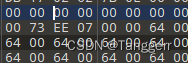
- 找到0x73,表明该字段为字符串格式,后面的四个字节即为字节码指令长度,将其数值改为8E
- 反编译即得到python代码
_map = [ [1, 1, 1, 1, 1, 1, 1, 1, 1, 1, 1, 1, 1, 1, 1, 1, 1, 1, 1, 1, 1, 1, 1, 1, 1, 1, 1, 1, 1, 1, 1], [1, 5, 1, 0, 0, 0, 0, 0, 0, 0, 0, 0, 0, 0, 0, 0, 0, 0, 0, 0, 1, 0, 0, 0, 0, 0, 0, 0, 0, 0, 1], [1, 0, 1, 0, 1, 1, 1, 1, 1, 1, 1, 1, 1, 0, 1, 1, 1, 1, 1, 0, 1, 0, 1, 1, 1, 1, 1, 1, 1, 0, 1], [1, 0, 1, 0, 0, 0, 1, 0, 0, 0, 0, 0, 0, 0, 1, 0, 0, 0, 1, 0, 0, 0, 1, 0, 1, 0, 0, 0, 1, 0, 1], [1, 0, 1, 1, 1, 1, 1, 0, 1, 1, 1, 1, 1, 1, 1, 1, 1, 0, 1, 1, 1, 1, 1, 0, 1, 0, 1, 0, 1, 0, 1], [1, 0, 0, 0, 1, 0, 0, 0, 1, 0, 0, 0, 0, 0, 0, 0, 0, 0, 0, 0, 0, 0, 1, 0, 0, 0, 1, 0, 0, 0, 1], [1, 1, 1, 0, 1, 0, 1, 1, 1, 0, 1, 1, 1, 1, 1, 1, 1, 1, 1, 1, 1, 1, 1, 0, 1, 1, 1, 1, 1, 1, 1], [1, 0, 0, 0, 1, 0, 1, 0, 0, 0, 1, 0, 0, 0, 0, 0, 0, 0, 0, 0, 1, 0, 0, 0, 1, 0, 0, 0, 1, 0, 1], [1, 0, 1, 1, 1, 0, 1, 0, 1, 1, 1, 0, 1, 1, 1, 1, 1, 1, 1, 0, 1, 0, 1, 1, 1, 0, 1, 0, 1, 0, 1], [1, 0, 0, 0, 0, 0, 1, 0, 1, 0, 0, 0, 1, 0, 0, 0, 1, 0, 1, 0, 1, 0, 0, 0, 1, 0, 1, 0, 0, 0, 1], [1, 1, 1, 1, 1, 1, 1, 0, 1, 0, 1, 1, 1, 0, 1, 0, 1, 0, 1, 0, 1, 1, 1, 0, 1, 0, 1, 1, 1, 0, 1], [1, 0, 0, 0, 0, 0, 0, 0, 1, 0, 0, 0, 0, 0, 1, 0, 0, 0, 1, 0, 1, 0, 0, 0, 1, 0, 1, 0, 0, 0, 1], [1, 0, 1, 1, 1, 1, 1, 1, 1, 1, 1, 1, 1, 1, 1, 1, 1, 0, 1, 0, 1, 0, 1, 1, 1, 0, 1, 0, 1, 1, 1], [1, 0, 0, 0, 0, 0, 0, 0, 1, 0, 0, 0, 0, 0, 0, 0, 1, 0, 1, 0, 0, 0, 1, 0, 0, 0, 1, 0, 0, 0, 1], [1, 0, 1, 1, 1, 1, 1, 0, 1, 0, 1, 0, 1, 0, 1, 1, 1, 0, 1, 1, 1, 1, 1, 0, 1, 1, 1, 1, 1, 1, 1], [1, 0, 1, 0, 0, 0, 1, 0, 1, 0, 1, 0, 1, 0, 1, 0, 0, 0, 1, 0, 0, 0, 0, 0, 0, 0, 0, 0, 0, 0, 1], [1, 0, 1, 0, 1, 0, 1, 0, 1, 0, 1, 0, 1, 1, 1, 0, 1, 1, 1, 0, 1, 1, 1, 1, 1, 0, 1, 1, 1, 0, 1], [1, 0, 1, 0, 1, 0, 1, 0, 1, 0, 1, 0, 0, 0, 1, 0, 0, 0, 1, 0, 1, 0, 0, 0, 1, 0, 1, 0, 0, 0, 1], [1, 0, 1, 0, 1, 1, 1, 0, 1, 0, 1, 1, 1, 0, 1, 1, 1, 0, 1, 0, 1, 0, 1, 0, 1, 1, 1, 0, 1, 1, 1], [1, 0, 0, 0, 1, 0, 0, 0, 1, 0, 1, 0, 0, 0, 0, 0, 1, 0, 1, 0, 1, 0, 1, 0, 0, 0, 1, 0, 0, 0, 1], [1, 0, 1, 1, 1, 0, 1, 0, 1, 0, 1, 0, 1, 1, 1, 1, 1, 0, 1, 0, 1, 0, 1, 1, 1, 0, 1, 0, 1, 0, 1], [1, 0, 1, 0, 0, 0, 1, 0, 1, 0, 1, 0, 0, 0, 0, 0, 0, 0, 1, 0, 1, 0, 1, 0, 1, 0, 1, 0, 1, 0, 1], [1, 0, 1, 0, 1, 1, 1, 0, 1, 0, 1, 1, 1, 1, 1, 1, 1, 1, 1, 1, 1, 0, 1, 0, 1, 0, 1, 0, 1, 0, 1], [1, 0, 1, 0, 0, 0, 1, 0, 1, 0, 1, 0, 0, 0, 0, 0, 0, 0, 0, 0, 1, 0, 1, 0, 1, 0, 1, 0, 1, 0, 1], [1, 0, 1, 1, 1, 0, 1, 0, 1, 0, 1, 1, 1, 1, 1, 0, 1, 0, 1, 0, 1, 0, 1, 0, 1, 0, 1, 0, 1, 0, 1], [1, 0, 0, 0, 1, 0, 1, 0, 1, 0, 0, 0, 0, 0, 1, 0, 1, 0, 1, 0, 0, 0, 1, 0, 0, 0, 1, 0, 1, 0, 1], [1, 1, 1, 1, 1, 0, 1, 1, 1, 1, 1, 1, 1, 0, 1, 1, 1, 0, 1, 1, 1, 1, 1, 1, 1, 0, 1, 1, 1, 0, 1], [1, 0, 0, 0, 0, 0, 1, 0, 0, 0, 0, 0, 1, 0, 0, 0, 1, 0, 0, 0, 0, 0, 0, 0, 1, 0, 0, 0, 0, 0, 1], [1, 0, 1, 1, 1, 1, 1, 0, 1, 1, 1, 0, 1, 1, 1, 0, 1, 1, 1, 1, 1, 1, 1, 0, 1, 1, 1, 1, 1, 0, 1], [1, 0, 0, 0, 0, 0, 0, 0, 0, 0, 1, 0, 0, 0, 0, 0, 0, 0, 0, 0, 0, 0, 0, 0, 1, 0, 0, 0, 0, 7, 1], [1, 1, 1, 1, 1, 1, 1, 1, 1, 1, 1, 1, 1, 1, 1, 1, 1, 1, 1, 1, 1, 1, 1, 1, 1, 1, 1, 1, 1, 1, 1]] def maze(): x = 1 y = 1 step = input() for i in range(len(step)): if step[i] == 'w': x -= 1 else: if step[i] == 's': x += 1 else: if step[i] == 'a': y -= 1 else: if step[i] == 'd': y += 1 else: return False if _map[x][y] == 1: return False if x == 29 and y == 29: return True - 一道用坐标进行移动的题,即我们要找出走出迷宫的路径
- 考虑深度优先搜索,是对一个连通图进行遍历的算法。它的思想是从一个顶点V0开始,沿着一条路一直走到底,如果发现不能到达目标解,那就返回到上一个节点,然后从另一条路开始走到底,这种尽量往深处走的概念即是深度优先的概念。
map1 = [[1, 1, 1, 1, 1, 1, 1, 1, 1, 1, 1, 1, 1, 1, 1, 1, 1, 1, 1, 1, 1, 1, 1, 1, 1, 1, 1, 1, 1, 1, 1], [1, 0, 1, 0, 0, 0, 0, 0, 0, 0, 0, 0, 0, 0, 0, 0, 0, 0, 0, 0, 1, 0, 0, 0, 0, 0, 0, 0, 0, 0, 1], [1, 0, 1, 0, 1, 1, 1, 1, 1, 1, 1, 1, 1, 0, 1, 1, 1, 1, 1, 0, 1, 0, 1, 1, 1, 1, 1, 1, 1, 0, 1], [1, 0, 1, 0, 0, 0, 1, 0, 0, 0, 0, 0, 0, 0, 1, 0, 0, 0, 1, 0, 0, 0, 1, 0, 1, 0, 0, 0, 1, 0, 1], [1, 0, 1, 1, 1, 1, 1, 0, 1, 1, 1, 1, 1, 1, 1, 1, 1, 0, 1, 1, 1, 1, 1, 0, 1, 0, 1, 0, 1, 0, 1], [1, 0, 0, 0, 1, 0, 0, 0, 1, 0, 0, 0, 0, 0, 0, 0, 0, 0, 0, 0, 0, 0, 1, 0, 0, 0, 1, 0, 0, 0, 1], [1, 1, 1, 0, 1, 0, 1, 1, 1, 0, 1, 1, 1, 1, 1, 1, 1, 1, 1, 1, 1, 1, 1, 0, 1, 1, 1, 1, 1, 1, 1], [1, 0, 0, 0, 1, 0, 1, 0, 0, 0, 1, 0, 0, 0, 0, 0, 0, 0, 0, 0, 1, 0, 0, 0, 1, 0, 0, 0, 1, 0, 1], [1, 0, 1, 1, 1, 0, 1, 0, 1, 1, 1, 0, 1, 1, 1, 1, 1, 1, 1, 0, 1, 0, 1, 1, 1, 0, 1, 0, 1, 0, 1], [1, 0, 0, 0, 0, 0, 1, 0, 1, 0, 0, 0, 1, 0, 0, 0, 1, 0, 1, 0, 1, 0, 0, 0, 1, 0, 1, 0, 0, 0, 1], [1, 1, 1, 1, 1, 1, 1, 0, 1, 0, 1, 1, 1, 0, 1, 0, 1, 0, 1, 0, 1, 1, 1, 0, 1, 0, 1, 1, 1, 0, 1], [1, 0, 0, 0, 0, 0, 0, 0, 1, 0, 0, 0, 0, 0, 1, 0, 0, 0, 1, 0, 1, 0, 0, 0, 1, 0, 1, 0, 0, 0, 1], [1, 0, 1, 1, 1, 1, 1, 1, 1, 1, 1, 1, 1, 1, 1, 1, 1, 0, 1, 0, 1, 0, 1, 1, 1, 0, 1, 0, 1, 1, 1], [1, 0, 0, 0, 0, 0, 0, 0, 1, 0, 0, 0, 0, 0, 0, 0, 1, 0, 1, 0, 0, 0, 1, 0, 0, 0, 1, 0, 0, 0, 1], [1, 0, 1, 1, 1, 1, 1, 0, 1, 0, 1, 0, 1, 0, 1, 1, 1, 0, 1, 1, 1, 1, 1, 0, 1, 1, 1, 1, 1, 1, 1], [1, 0, 1, 0, 0, 0, 1, 0, 1, 0, 1, 0, 1, 0, 1, 0, 0, 0, 1, 0, 0, 0, 0, 0, 0, 0, 0, 0, 0, 0, 1], [1, 0, 1, 0, 1, 0, 1, 0, 1, 0, 1, 0, 1, 1, 1, 0, 1, 1, 1, 0, 1, 1, 1, 1, 1, 0, 1, 1, 1, 0, 1], [1, 0, 1, 0, 1, 0, 1, 0, 1, 0, 1, 0, 0, 0, 1, 0, 0, 0, 1, 0, 1, 0, 0, 0, 1, 0, 1, 0, 0, 0, 1], [1, 0, 1, 0, 1, 1, 1, 0, 1, 0, 1, 1, 1, 0, 1, 1, 1, 0, 1, 0, 1, 0, 1, 0, 1, 1, 1, 0, 1, 1, 1], [1, 0, 0, 0, 1, 0, 0, 0, 1, 0, 1, 0, 0, 0, 0, 0, 1, 0, 1, 0, 1, 0, 1, 0, 0, 0, 1, 0, 0, 0, 1], [1, 0, 1, 1, 1, 0, 1, 0, 1, 0, 1, 0, 1, 1, 1, 1, 1, 0, 1, 0, 1, 0, 1, 1, 1, 0, 1, 0, 1, 0, 1], [1, 0, 1, 0, 0, 0, 1, 0, 1, 0, 1, 0, 0, 0, 0, 0, 0, 0, 1, 0, 1, 0, 1, 0, 1, 0, 1, 0, 1, 0, 1], [1, 0, 1, 0, 1, 1, 1, 0, 1, 0, 1, 1, 1, 1, 1, 1, 1, 1, 1, 1, 1, 0, 1, 0, 1, 0, 1, 0, 1, 0, 1], [1, 0, 1, 0, 0, 0, 1, 0, 1, 0, 1, 0, 0, 0, 0, 0, 0, 0, 0, 0, 1, 0, 1, 0, 1, 0, 1, 0, 1, 0, 1], [1, 0, 1, 1, 1, 0, 1, 0, 1, 0, 1, 1, 1, 1, 1, 0, 1, 0, 1, 0, 1, 0, 1, 0, 1, 0, 1, 0, 1, 0, 1], [1, 0, 0, 0, 1, 0, 1, 0, 1, 0, 0, 0, 0, 0, 1, 0, 1, 0, 1, 0, 0, 0, 1, 0, 0, 0, 1, 0, 1, 0, 1], [1, 1, 1, 1, 1, 0, 1, 1, 1, 1, 1, 1, 1, 0, 1, 1, 1, 0, 1, 1, 1, 1, 1, 1, 1, 0, 1, 1, 1, 0, 1], [1, 0, 0, 0, 0, 0, 1, 0, 0, 0, 0, 0, 1, 0, 0, 0, 1, 0, 0, 0, 0, 0, 0, 0, 1, 0, 0, 0, 0, 0, 1], [1, 0, 1, 1, 1, 1, 1, 0, 1, 1, 1, 0, 1, 1, 1, 0, 1, 1, 1, 1, 1, 1, 1, 0, 1, 1, 1, 1, 1, 0, 1], [1, 0, 0, 0, 0, 0, 0, 0, 0, 0, 1, 0, 0, 0, 0, 0, 0, 0, 0, 0, 0, 0, 0, 0, 1, 0, 0, 0, 0, 0, 1], [1, 1, 1, 1, 1, 1, 1, 1, 1, 1, 1, 1, 1, 1, 1, 1, 1, 1, 1, 1, 1, 1, 1, 1, 1, 1, 1, 1, 1, 1, 1]] flag = "" map2 = [[0 for i in range(len(map1))] for i in range(len(map1)) ] def DFS(x,y): global flag if x == len(map1) - 2 and y == len(map1) - 2: #判断边界 print(flag) if map1[x+1][y] == 0 and map2[x+1][y] == 0: map2[x][y] = 1 flag += 's' DFS(x+1,y) flag = flag[:-1] map2[x][y] = 0 if map1[x-1][y] == 0 and map2[x-1][y] == 0: map2[x][y] = 1 flag += 'w' DFS(x-1,y) flag = flag[:-1] map2[x][y] = 0 if map1[x][y+1] == 0 and map2[x][y+1] == 0: map2[x][y] = 1 flag += 'd' DFS(x,y+1) flag = flag[:-1] map2[x][y] = 0 if map1[x][y-1] == 0 and map2[x][y-1] == 0: map2[x][y] = 1 flag += 'a' DFS(x,y-1) flag = flag[:-1] map2[x][y] = 0 y=1 x=1 DFS(x,y) 结果是ssssddssaassddddwwwwddwwddddddwwddddddssddwwddddddddssssaawwaassaassaassddssaassaawwwwwwaaaaaaaassaassddddwwddssddssssaassddssssaaaaaawwddwwaawwwwaassssssssssssddddssddssddddddddwwaaaaaawwwwddssddwwwwwwwwddssddssssssssddddss
- 没出flag,上网搜一下,发现还有最后一步,MD5加密
- flag{801f0e7d2790bd5b0732e}
免责声明:本站所有文章内容,图片,视频等均是来源于用户投稿和互联网及文摘转载整编而成,不代表本站观点,不承担相关法律责任。其著作权各归其原作者或其出版社所有。如发现本站有涉嫌抄袭侵权/违法违规的内容,侵犯到您的权益,请在线联系站长,一经查实,本站将立刻删除。 本文来自网络,若有侵权,请联系删除,如若转载,请注明出处:https://haidsoft.com/109935.html