
大家好,欢迎来到IT知识分享网。
目录
5.如果数据类型为Integer这样的包装类(其源码不能更改),怎么改大根堆?
1.定义
队列是一种先进先出(FIFO)的数据结构,但有些情况下,操作的数据可能带有优先级,一般出队列时,可能需要优先级高的元素先出队列,该中场景下,使用队列显然不合适,比如:在手机上玩游戏的时候,如果有来电,那么系统应该优先处理打进来的电话。
在这种情况下,我们的数据结构应该提供两个最基本的操作,一个是返回最高优先级对象,一个是添加新的对象。这种数据结构就是优先级队列(Priority Queue)。
简单而言,底层其实就是一颗二叉树,只不过这棵二叉树比较特殊,为完全二叉树,在这个基础上实现的一种结构,这种结构叫做堆。
2.性质
从上面的定义中,我们可以得到堆的性质:
1.堆中某个节点的值总是不大于或不小于其父节点的值;
2.堆总是一棵完全二叉树。
并且从堆的概念可知,堆是一棵完全二叉树,因此可以层序的规则采用顺序的方式来高效存储。
3.分类
小根堆:根节点比左右孩子都小 大根堆:根节点比左右孩子都大
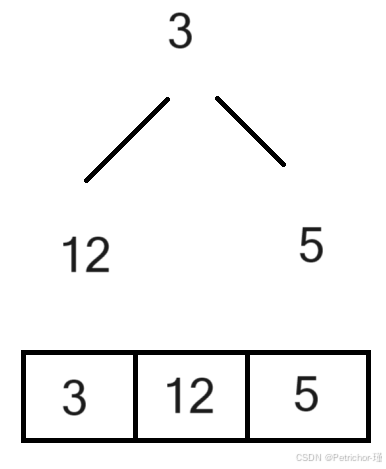
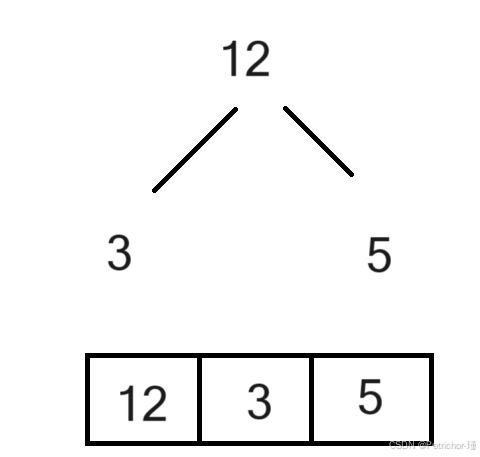
4.示例代码
在本次示例代码中,我们将使用向下调整的方法,从最后一个子树的根节点开始局部调整为大根堆,直到整个数组都满足大根堆的性质。
1. 在实现这个数据结构的过程中需要解决的问题两点:
1.1 如何找到最后一课子树的根节点 —-(array.length-1-1)/2
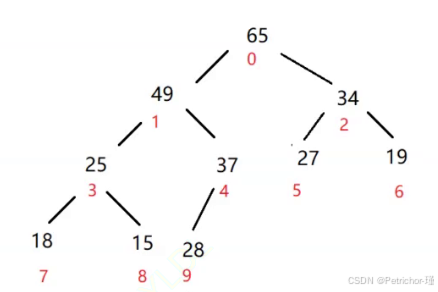
1.2 每颗子树调整的时候,结束位置在哪里 —- location < array.length
2.示例代码
2.1 大根堆
/ * 大根堆 * * @param array */ public void createHeap(int[] array) { for (int parent = (array.length - 1 - 1) / 2; parent >= 0; parent--) { shiftDown(parent, array); } } / * @param parent 每颗子树的根节点 * @param array 每颗子树调整的结束位置 location < array.length */ public void shiftDown(int parent, int[] array) { int child = 2 * parent + 1; while (child < array.length) { //child + 1 < array.length 保证右孩子 if (child + 1 < array.length && array[child] < array[child + 1]) { child++; } //child下标一定为左右孩子 最大值的下标 if (array[parent] < array[child]) { int tmp = array[parent]; array[parent] = array[child]; array[child] = tmp; parent = child; child = 2 * parent + 1; }else{ break; } } }2.2 小根堆
/ * 小根堆 * * @param array */ public void createHeap(int[] array) { for (int parent = (array.length - 1 - 1) / 2; parent >= 0; parent--) { shiftDown(parent, array); } } / * @param parent 每颗子树的根节点 * @param array 每颗子树调整的结束位置 location < array.length */ public void shiftDown(int parent, int[] array) { int child = 2 * parent + 1; while (child < array.length) { //child + 1 < array.length 保证右孩子 if (child + 1 < array.length && array[child] > array[child + 1]) { child++; } //child下标一定为左右孩子 最小值的下标 if (array[parent] > array[child]) { int tmp = array[parent]; array[parent] = array[child]; array[child] = tmp; parent = child; child = 2 * parent + 1; }else{ break; } } }2.3 注意点(以大根堆为例)
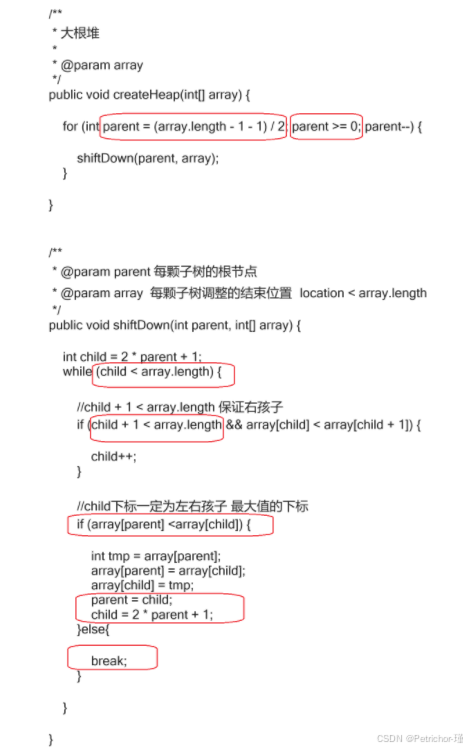
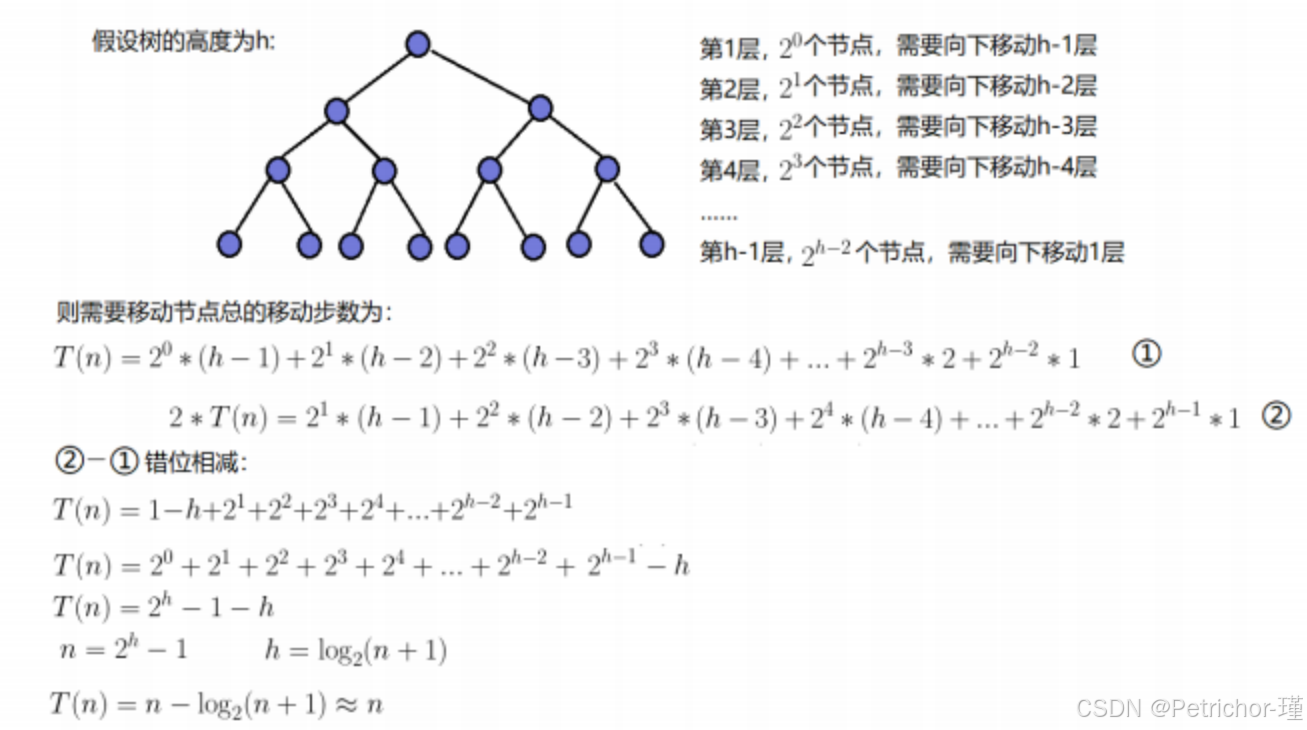
2.4 建堆的时间复杂度-O(N)
5.PriorityQueue(小根堆)-线程不安全
其中,PriorityBlockingQueue-线程安全。下面是对PriorityQueue的使用介绍。
1. 使用注意事项
- 1. 使用时必须导入PriorityQueue所在的包,即:importjava.util.PriorityQueue;
- 2. PriorityQueue中放置的元素必须要能够比较大小,不能插入无法比较大小的对象,否则会抛出ClassCastException异常
- 3. 不能插入null对象,否则会抛出NullPointerException
- 4. 没有容量限制,可以插入任意多个元素,其内部可以自动扩容
- 5. 插入和删除元素的时间复杂度为O(logN)
- 6. PriorityQueue底层使用了堆数据结构
- 7. PriorityQueue默认情况下是小堆—即每次获取到的元素都是最小的元素
2. 构造器介绍
|
构造器 PriorityQueue(Collection extends E> c) 用一个集合来创建优先级队列 |
功能介绍 |
| PriorityQueue() | 创建一个空的优先级队列,默认容量是11 |
| PriorityQueue(int initialCapacity) | 创建一个初始容量为initialCapacity的优先级队列,注意:initialCapacity不能小于1,否则会抛IllegalArgumentException异常 |
3. 使用示例
class Student { private int age; public Student(int age) { this.age = age; } } public class Main { public static void main(String[] args) { PriorityQueue<Student> priorityQueue = new PriorityQueue<>(); priorityQueue.offer(new Student(20)); priorityQueue.offer(new Student(10)); } }当我们在IDEA中运行这个代码的时候,代码会报错,报错为:

为什么会出现这个情况呢?我们需要了解在main方法中的三个代码的运行逻辑:
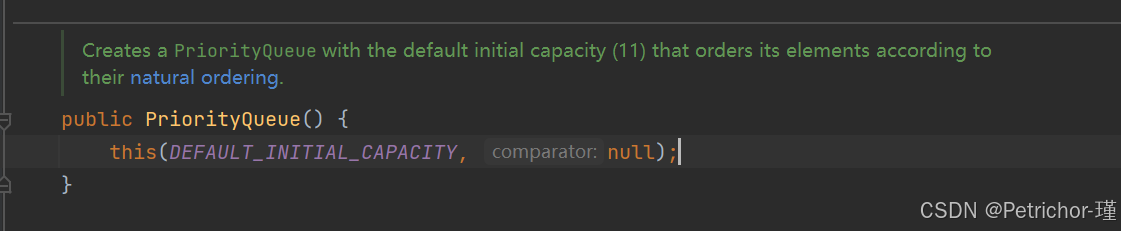
1.PriorityQueue priorityQueue = new PriorityQueue<>();
1.点击PriorityQueue查看源码,查看其默认的数组容量为11

- 点PriorityQueue,查看构造方法
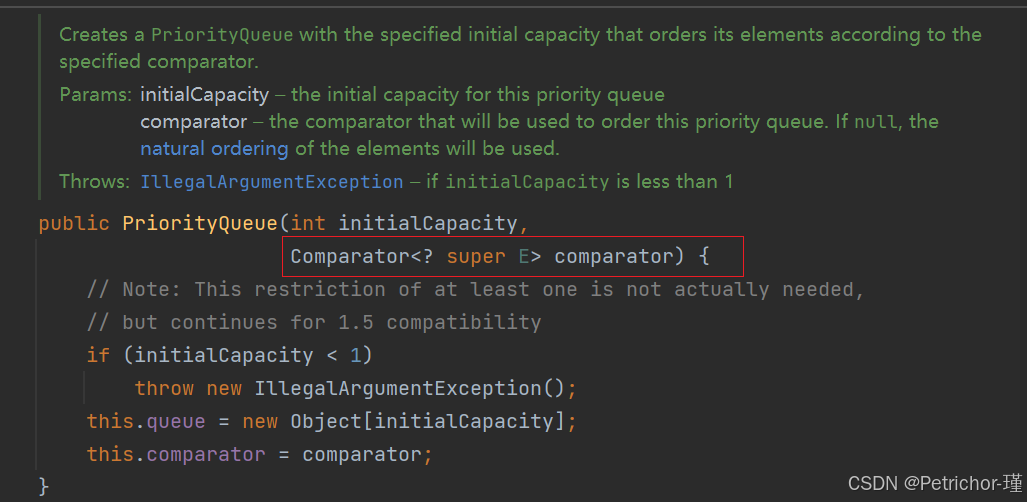
 2.点击this,查看方法,我们需要先了解两个变量的含义
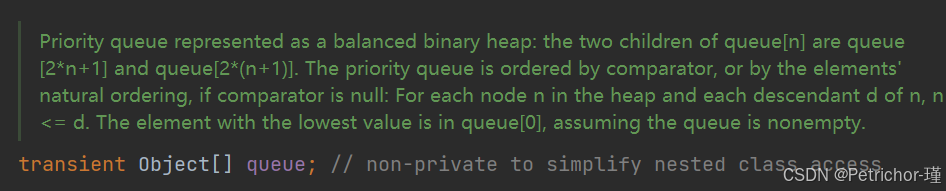

- 比较器设置为null, 当没有传入比较器的时候,那么相当于只是对queue数组进行实例化了
2. priorityQueue.offer(new Student(20));
1.执行第二句话,第一次没有产生比较,直接放入零下标
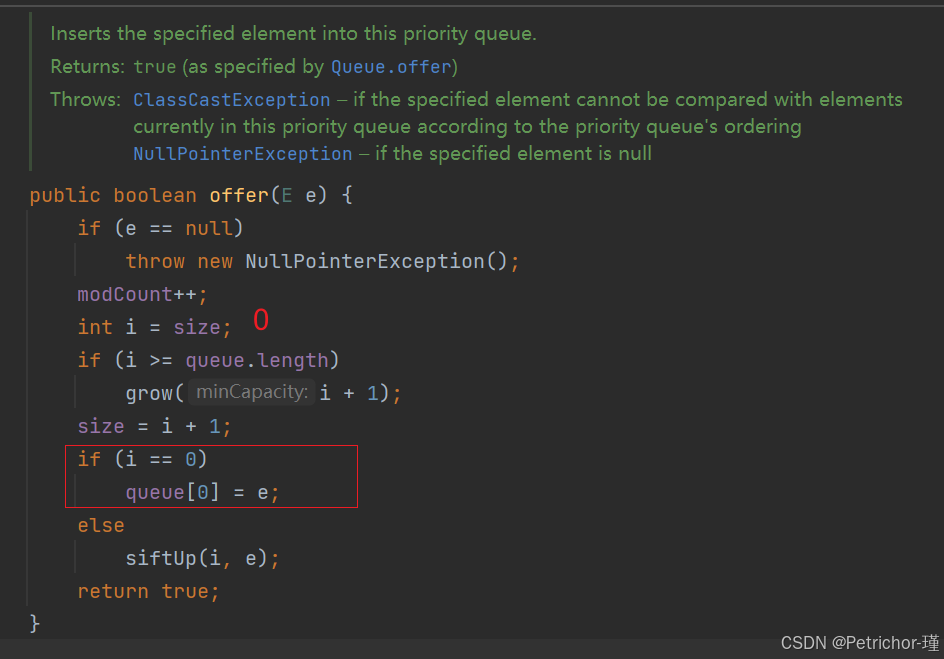
3.priorityQueue.offer(new Student(10));
1.第二次比较
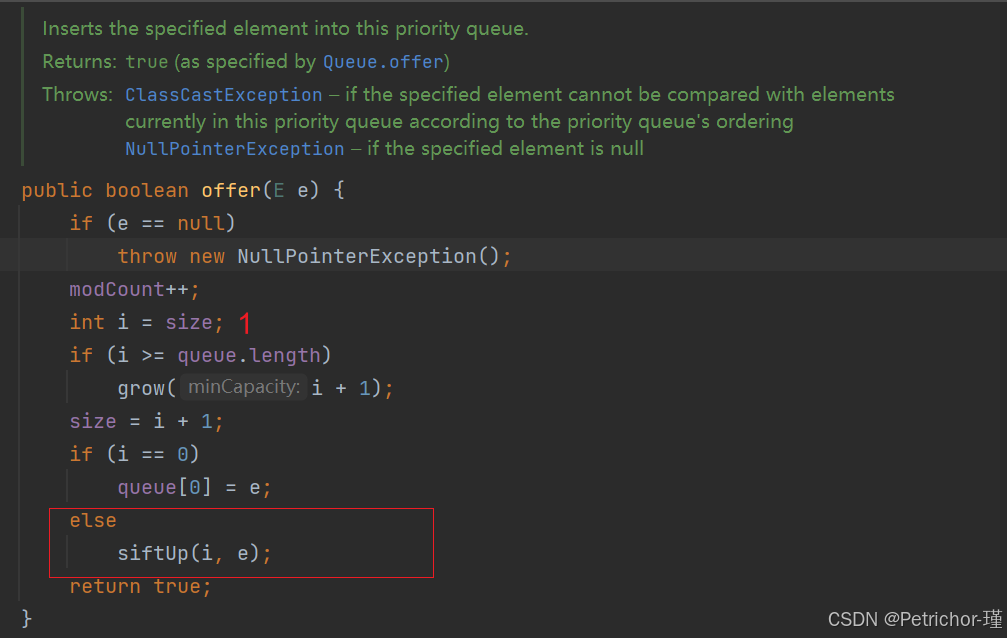
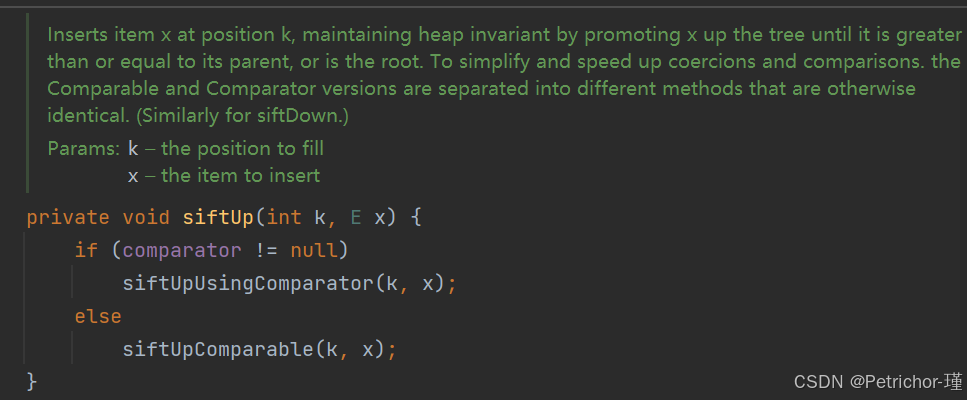
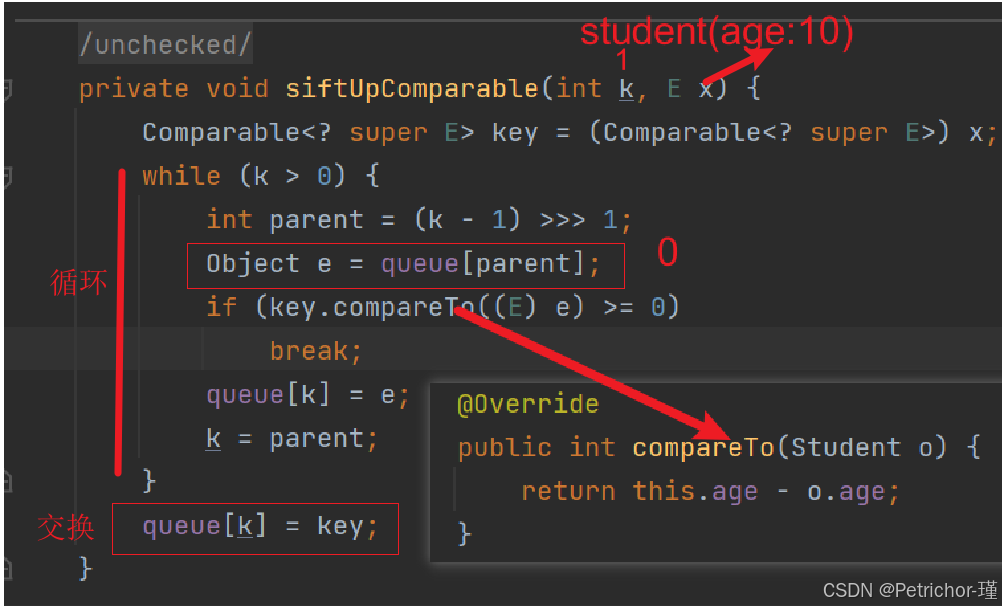
2.我们需要进入sifUp()方法进行查看,我们发现如果传入的比较器为空,就会调用siftUpComparable(k, x);
3.点击siftUpComparable(k, x);方法,我们会发现会调用key的compareTo方法,但是在Student类中,并没有这个方法,所以会抛出异常
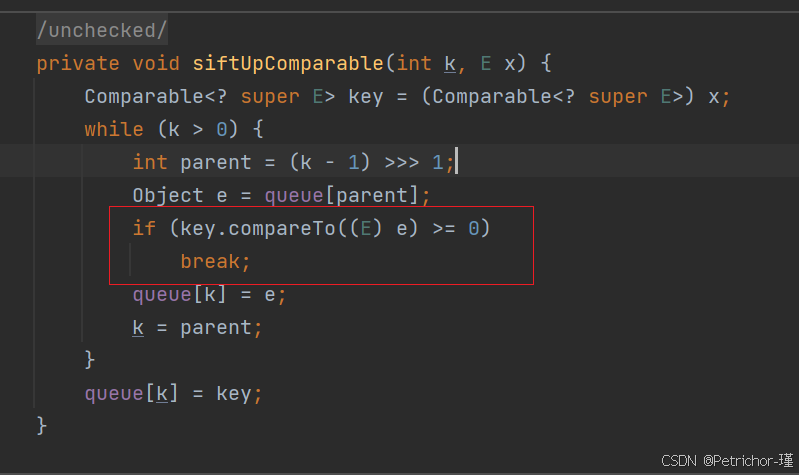
4.所以我们需要给Student类,重写comparabTo方法
class Student implements Comparable<Student> { private int age; public Student(int age) { this.age = age; } @Override public int compareTo(Student o) { return this.age - o.age; } } public class Main { public static void main(String[] args) { PriorityQueue<Student> priorityQueue = new PriorityQueue<>(); priorityQueue.offer(new Student(20)); priorityQueue.offer(new Student(10)); } }5.那么在第三行代码中,就会调用Student类的comparabTo方法,并且在这个方法中,没有进入循环,就进行交换了。
3.priorityQueue.offer(new Student(10));
4. 小根堆改为大根堆
在1.使用注意事项中,我们说过:
7. PriorityQueue默认情况下是小堆—即每次获取到的元素都是最小的元素
那我们应该怎么把其改成大根堆呢?以上面的Student类为例,我们可以改变comparabTo方法,将比较器的相减更换即可,将this.age – o.age换成return o.age- this.age即可。
class Student implements Comparable<Student> { private int age; public Student(int age) { this.age = age; } @Override public int compareTo(Student o) { return o.age- this.age; } } public class Main { public static void main(String[] args) { PriorityQueue<Student> priorityQueue = new PriorityQueue<>(); priorityQueue.offer(new Student(20)); priorityQueue.offer(new Student(10)); } }5.如果数据类型为Integer这样的包装类(其源码不能更改),怎么改大根堆?
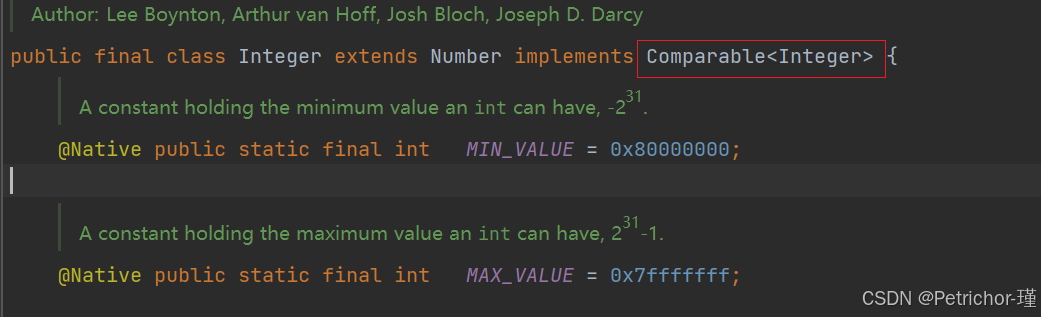
- 传入自己添加定义的比较器:直接实现Comparator接口,然后重写该接口中的compare方法即
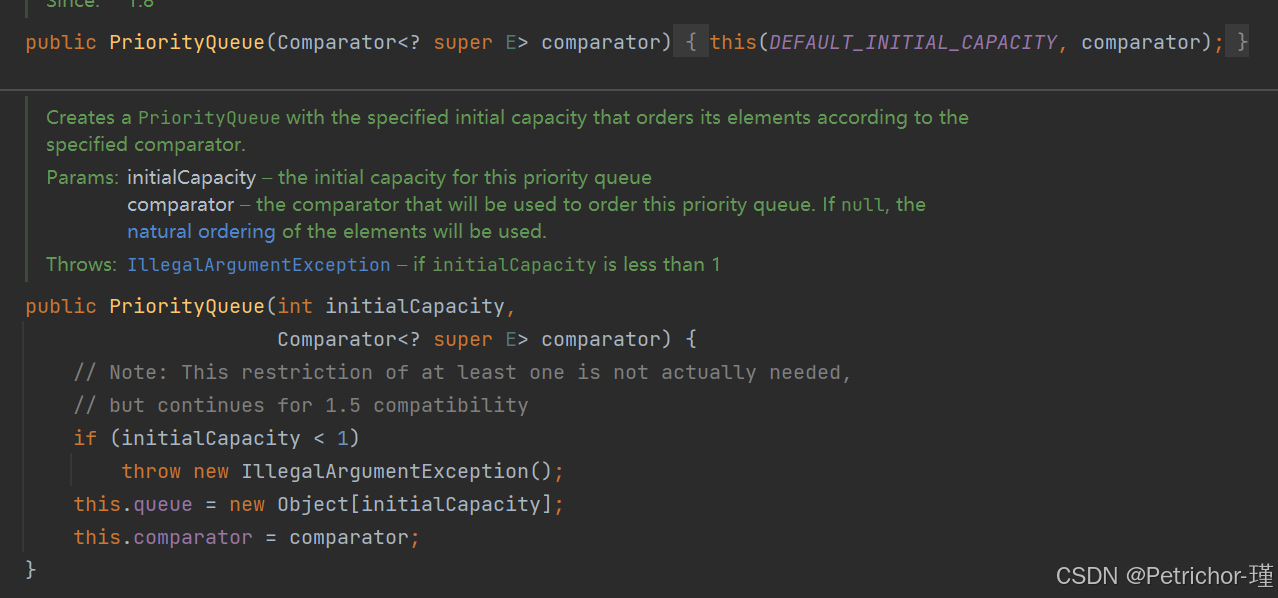
1.自定义类IntCmp,实现Comparator<Integer>接口
class IntCmp implements Comparator<Integer>{ @Override public int compare(Integer o1, Integer o2) { return o2-o1; } }PriorityQueue<Integer> priorityQueue1 = new PriorityQueue<>(new IntCmp());2.匿名内部类
PriorityQueue<Integer> priorityQueue2 = new PriorityQueue<>(new Comparator<Integer>() { @Override public int compare(Integer o1, Integer o2) { return o2.compareTo(o1); } });3. lambda表达式
PriorityQueue<Integer> priorityQueue3 = new PriorityQueue<>((x,y)->{return x.compareTo(y);}); PriorityQueue<Integer> priorityQueue4 = new PriorityQueue<>((x,y)-> x.compareTo(y));6.总结
- 1.当没有传数组容量的时候,默认11;
- 2.当没有传入比较器的时候,他必须是可比较的;
- 3.优先使用的是比较器来比较;
7.扩容问题
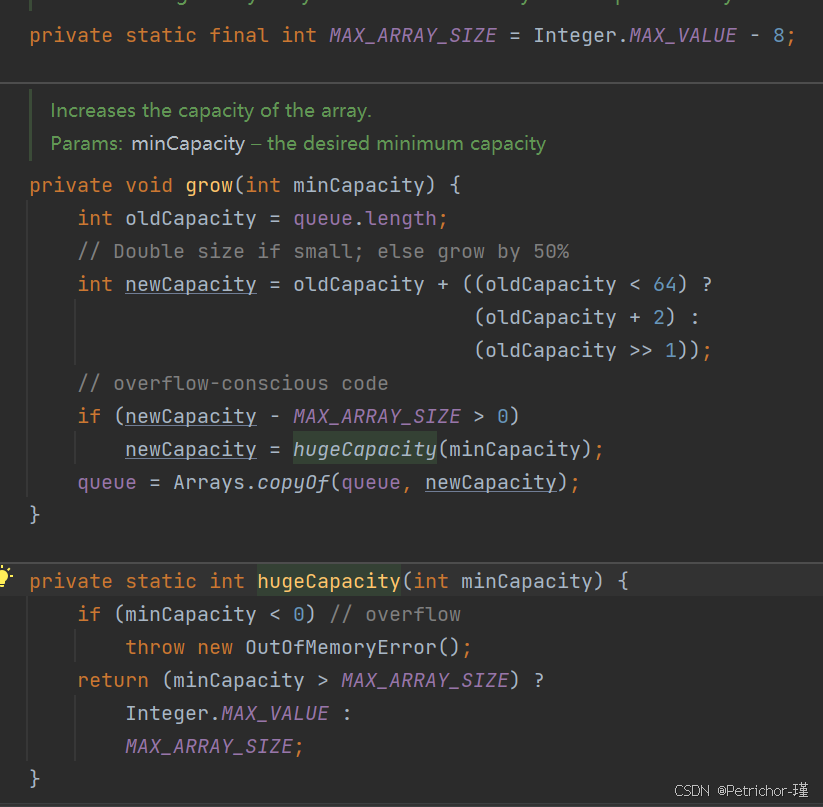
小于64,二倍扩容,大于64,1.5扩容
 8.常用方法
| 函数名 | 功能介绍 |
|---|---|
| boolean offer(E e) | 插入元素e,插入成功返回true,如果e对象为空,抛出NullPointerException异常,时间复杂度为(O(logN)) ,注意:空间不够时候会进行扩容 |
| E peek() | 获取优先级最高的元素,如果优先级队列为空,返回null |
| E poll() | 移除优先级最高的元素并返回,如果优先级队列为空,返回null |
| int size() | 获取有效元素的个数 |
| void clear() | 清空 |
| boolean isEmpty() | 检测优先级队列是否为空,空返回true |
其中需要注意:
1.offer-堆的插入
- 1.插入一个数到数组最后面,如果数组不够大,先扩容;
- 2.向上调整
2.poll-堆的删除
- 1.判断是否非空,交换0下标和数组最后一个的值;
- 2.堆的有效数据个数减一;
- 3.向下调整
以上就是优先级队列的所有内容了。
免责声明:本站所有文章内容,图片,视频等均是来源于用户投稿和互联网及文摘转载整编而成,不代表本站观点,不承担相关法律责任。其著作权各归其原作者或其出版社所有。如发现本站有涉嫌抄袭侵权/违法违规的内容,侵犯到您的权益,请在线联系站长,一经查实,本站将立刻删除。 本文来自网络,若有侵权,请联系删除,如若转载,请注明出处:https://haidsoft.com/112354.html